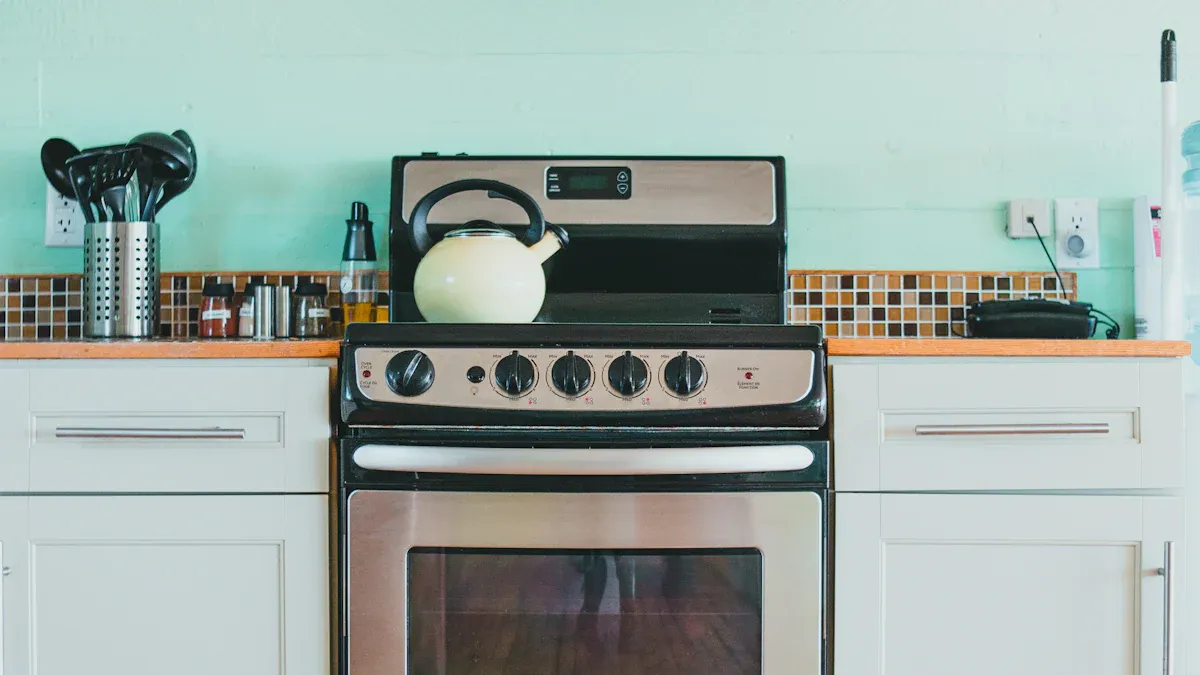
If your oven smells like gas, you might notice a faint odor when you first turn it on. A strong or lingering smell signals a problem. You need to act fast because gas leaks can be dangerous.
Always treat strong gas odors seriously to keep your home safe.
Key Takeaways
A faint gas smell at startup is normal, but a strong or lingering odor signals a potential gas leak. Act quickly to ensure safety.
Regular cleaning and maintenance of your oven can prevent gas smells caused by food spills, dirty igniters, or blocked vents.
If you suspect a gas leak, turn off the oven and gas supply, ventilate the area, and call for professional help immediately.
Is it Normal That Oven Smells Like Gas?
You might notice a faint gas smell when you first turn on your oven. This is usually normal. During startup, a small amount of gas escapes before the burner ignites. Appliance safety guidelines explain that this brief odor should disappear within a few minutes. If the oven gas smell lingers or grows stronger, you should treat it as a warning sign.
Tip: A quick, faint gas smell at startup is common. A strong or lasting odor means you need to check for problems.
Many people worry when their oven smells like gas, but not every odor signals danger. Here are some common misconceptions:
Not all gas smells mean you have a gas leak or a major problem.
Spilled food, blocked vents, or even fresh paint can cause a temporary gas smell.
A slight odor at startup is normal, but a persistent gas smell is not.
If your oven smells like gas for more than a few minutes, look for these warning signs:
Soot or black marks around the burner
Strange or burning smells while the oven runs
Condensation on nearby windows
The kitchen feels stuffy or warms up too quickly
Carbon monoxide alarm chirping or beeping
If you notice any of these, you may have a gas leak or a serious oven problem. Always act quickly to keep your home safe.
7 Causes My Oven Smells Like Gas
If your oven smells like gas, you need to find the cause quickly. Some reasons are harmless, but others can signal a gas leak or a serious safety risk. Here are the seven most common causes and how each one can make your oven smell like gas.
1. Oven liners
Oven liners help keep your oven clean, but they can block vents if you place them incorrectly. When airflow gets restricted, carbon monoxide can build up. The Oklahoma City Fire Department warns that blocking vents with oven liners or aluminum foil can create dangerous conditions. If you notice your oven smells like gas after adding a liner, check if it covers any slots or holes. Always make sure oven liners do not block airflow. Materials like aluminum foil can trap heat and cause a gas oven smell, which may lead to health risks.
Tip: Never cover oven vents with liners or foil. Proper airflow keeps your oven safe and prevents dangerous gas leaks from connections or seals.
2. Dirty oven cavity
Food spills and grease buildup can make your oven smell like gas when you turn it on. When old food burns, it releases odors that can mimic a gas leak. You should deep clean your oven every three months if you use it regularly. If you cook often, clean every three weeks. Spot clean spills right away to prevent strong odors. Keeping your oven clean helps you avoid confusing a dirty oven smell with a real gas leak.
Deep clean every three months for average use.
Clean every three weeks for heavy use.
Spot clean spills immediately.
3. Damaged igniter
A damaged igniter often causes your oven to smell like gas. If the igniter does not get hot enough, gas escapes without burning. You might hear a clicking sound, but the burner does not light. This lets natural gas build up inside the oven. Over time, this can lead to small explosions or a strong gas oven smell. You should fix igniter problems quickly to avoid safety risks and prevent gas leaks from connections or seals.
Insufficient heat from the igniter releases gas.
Clicking sound without ignition signals a problem.
Accumulated gas can cause explosions.
4. New staining or paint
If you recently painted your kitchen or stained cabinets, your oven may smell like gas. New paint and stains release fumes that can mix with the normal oven smell. These odors often fade after a few days. If the smell lingers or gets stronger, check for other causes. Sometimes, strong chemical odors can mask a real gas leak, so stay alert.
5. Newly installed
A new oven often emits a gas oven smell during its first few uses. The heating of new parts and protective coatings creates this odor. Usually, the smell disappears after several uses. If your oven smells like gas after the first week, you should investigate further. Persistent odors may signal a problem with installation or gas leaks from connections or seals.
New ovens emit odors from heating new parts.
Smells should fade after a handful of uses.
Continued odor may indicate a leak.
6. Foil on Oven Bottom
Placing foil on the oven bottom can block airflow and trap heat. This leads to overheating and a gas oven smell. Blocking vents with foil can cause carbon monoxide buildup, which is dangerous. Melting foil may create a fire hazard or damage your oven. Always avoid lining the oven bottom with foil, especially near heating elements.
Foil blocks airflow and causes overheating.
Carbon monoxide can build up if vents are blocked.
Melting foil increases fire risk.
7. Heavy Soiling
Heavy soiling from food spills or splatters can make your oven smell like gas. When you heat the oven, old food debris burns and releases strong odors. Cleaning splatters and debris helps eliminate these smells. If your oven smells like gas every time you use it, check for heavy soiling and clean it thoroughly.
Food spills and splatters produce gas-like odors.
Regular cleaning prevents strong oven smells.
Note: If your oven smells like gas and the odor is strong or persistent, treat it as a warning. A faint smell at startup is normal, but lasting or intense odors can signal a gas leak. Always check for yellow flames, soot, or condensation. If you suspect a leak, turn off the oven and call for help.
Why does my gas oven smell like gas when it’s off?
You might feel surprised when you notice a gas smell from your oven even though it is turned off. This situation can happen for several reasons. Appliance repair experts often find that gas odors can come from more than just leaks. You should check for these common causes:
Stovetop burners may get bumped or turned on by accident.
Aluminum foil or oven liners can block vents and trap odors.
Food debris or grease inside a dirty oven can release gas-like smells.
New oven installations sometimes emit odors from protective coatings.
Gas companies add odorants to natural gas, making leaks easier to detect.
A failing igniter may cause lingering smells after use.
Persistent odors can signal a possible gas leak.
Residual gas buildup can also occur when the oven is not in use. You should look for these issues:
Dirty or clogged burners can disrupt airflow and cause odors.
Misaligned burners may create uneven gas flow.
Faulty or dirty orifices can lead to improper gas-air mixtures.
Blocked air shutters prevent clean burning.
Incorrect gas pressure affects flame balance.
Alert: If you smell gas when your oven is off, do not ignore it. Gas leaks can be dangerous. Open windows, avoid using electrical switches, and contact a professional right away.
You can prevent oven gas smells by keeping burners clean, checking for blockages, and scheduling regular maintenance. If the smell persists, you should treat it as a warning sign and seek help to keep your home safe.
Why does my oven smell like gas when preheating?
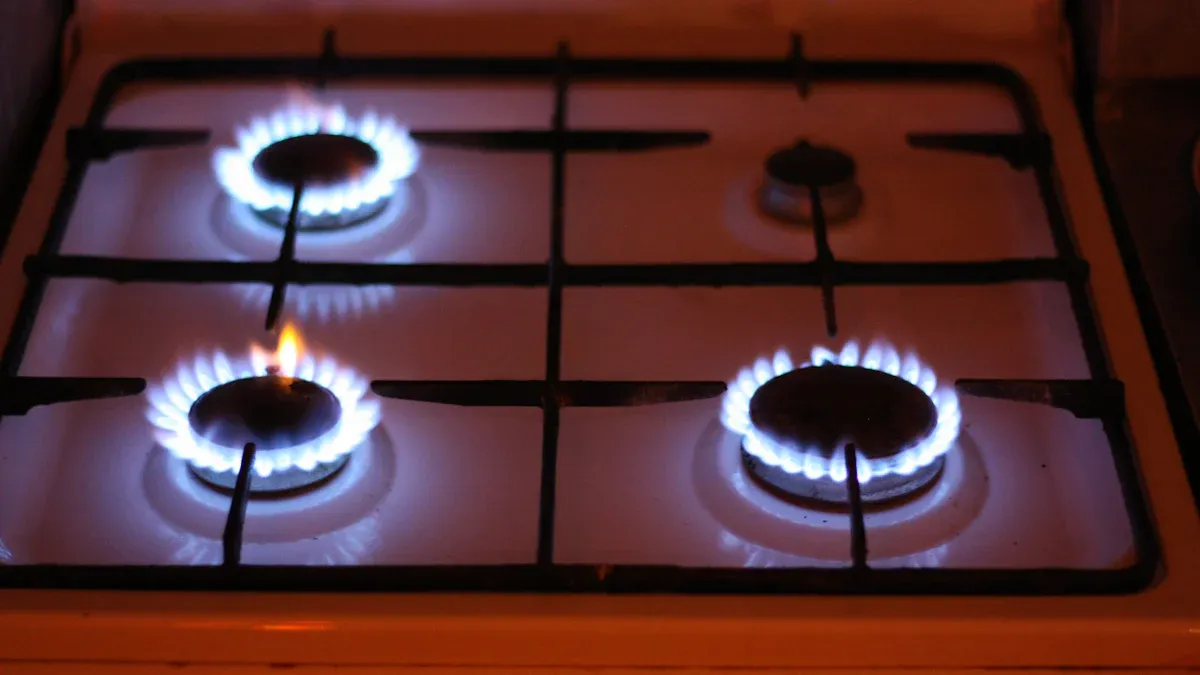
You may notice a gas smell when preheating your oven. This experience can feel alarming, but not every odor means danger. During preheating, the burner ignites and sometimes releases a small amount of gas before the flame catches. This gas smell when preheating should fade within a few minutes. If the odor lingers, you need to investigate further.
Several reasons can cause your oven to smell like gas during preheating:
A new oven often emits odors as insulating materials or protective coatings heat up for the first few uses.
A faulty igniter may delay ignition, allowing gas to escape before burning. This can create a persistent oven smell and signals a malfunction.
If you hear a hissing sound or notice a sulfur-like odor, you might have a gas leak. This situation requires immediate action.
Food spills or debris inside the oven can also produce odors that mimic a gas leak.
Tip: Always pay attention to how long the smell lasts. A brief odor is normal, but a strong or lasting smell like gas can indicate a problem.
You can use your senses to judge the situation. If the gas smell disappears quickly, you likely have nothing to worry about. If it stays or gets stronger, turn off the oven and ventilate your kitchen. Contact a professional to check for leaks or faulty parts. Regular cleaning and maintenance help prevent unwanted odors and keep your oven safe.
Gas Smell: Immediate Steps to Take & Fixes
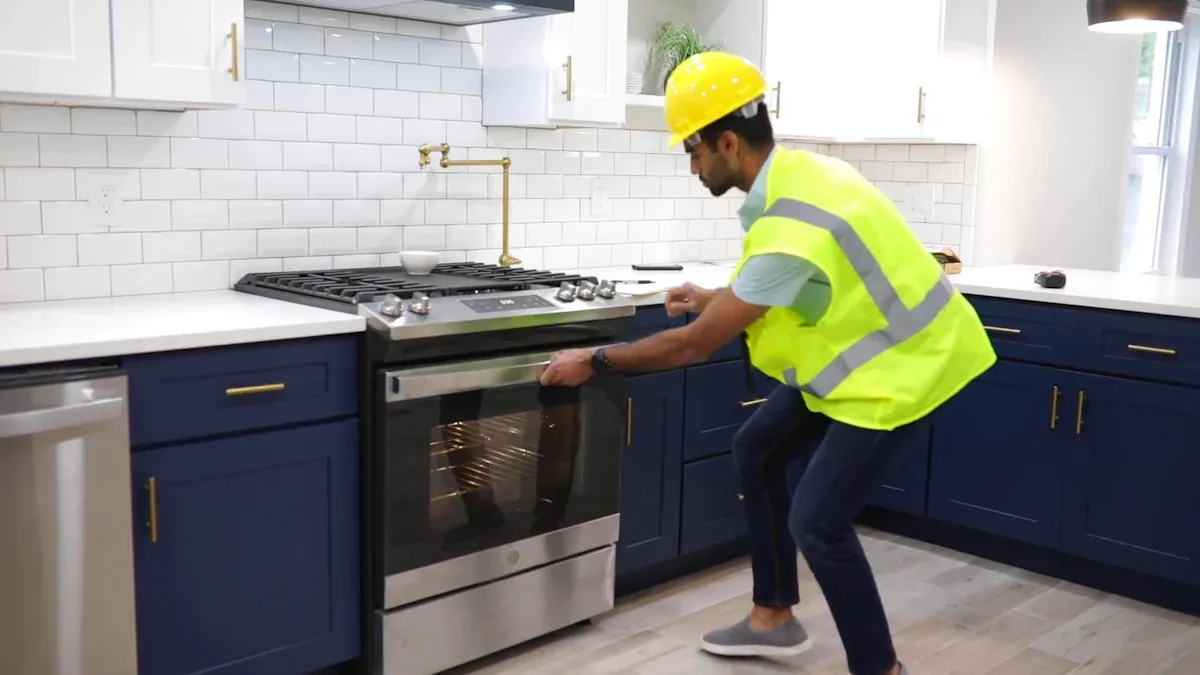
When you notice a gas leak or strong gas smell from your oven, you must act quickly to protect yourself and your home. Some situations require urgent action, while others allow for troubleshooting and maintenance. Here’s how you can handle both.
What to Do If You Suspect a Gas Leak
If you detect a strong or persistent gas smell, you need to follow these immediate steps to take:
Turn off the oven and gas supply. Make sure you shut off the oven and the gas supply to the appliance right away.
Ventilate the area. Open windows and doors to let fresh air in and help remove the gas from your kitchen.
Avoid ignition sources. Do not light matches, candles, or use any open flames. Stay away from using electronics, including light switches and phones, inside the house.
Leave the house immediately. Get everyone out of the building as soon as possible.
Call 911 or your gas provider from a safe distance. Use your phone only after you are outside and away from the house.
Do not search for the source of the leak or try to repair it yourself. Leave this to professionals.
Alert: Never ignore gas leak signs. If you notice a hissing sound, sulfur-like odor, or feel dizzy, leave the area and call for help.
What Not to Do
Do not keep windows and doors closed.
Do not use matches, lighters, or any ignition sources.
Do not use electronics inside the house.
Do not try to fix the leak yourself.
Do not fail to report the situation.
Troubleshooting Less Urgent Gas Odors
If you only notice a faint gas smell at startup or a mild oven smell, you can try these steps before calling for help:
Clean the inside of your oven to remove food spills and grease that may cause odors.
Remove aluminum foil from the bottom of the oven. This helps maintain proper airflow and combustion.
Ensure all knobs are turned to the ‘OFF’ position.
Check that oven vents are not blocked by bakeware, oven mats, or liners.
Inspect for visible issues, such as yellow flames, soot, or condensation around the burner.
If you see issues with the pilot light or burner, do not use the oven until a professional inspects it.
Tip: Regular cleaning and removing blockages can prevent many minor gas odors.
Maintenance Tips to Prevent Future Gas Leaks
You can reduce the risk of a gas appliance leak and keep your oven safe by following these maintenance routines:
Check for and remove any packaging materials or stickers inside the oven after installation.
Regularly clean the oven to eliminate caked-on food and grease.
Have the gas igniter inspected and replaced by a professional if it shows signs of failure or dirt buildup.
Schedule annual maintenance for all gas appliances in your home.
Always inspect for visible issues before and after using your oven.
Why You Should Never Ignore Persistent Gas Odors
Ignoring a gas leak or ongoing gas smell can lead to serious risks. The table below shows the dangers you face if you do not address these problems:
Risk Type | Description |
|---|---|
Fire Hazard | Faulty wiring or malfunctioning components can overheat, igniting flammable materials nearby. |
Carbon Monoxide Poisoning | Poorly maintained gas ovens may leak, releasing this odorless gas, leading to serious health issues. |
Electrical Shock | Faulty connections can pose a risk of shock to users or those attempting repairs. |
Note: Always take gas leak signs seriously. If you notice persistent odors, turn off the oven and gas supply, ventilate the area, avoid ignition sources, and call a professional.
Regular Checks for a Safe Kitchen
You can keep your kitchen safe by making these checks part of your routine:
Inspect for visible issues with the pilot light or burner.
Ventilate the area when using your oven, especially if you notice any unusual smells.
Avoid ignition sources if you suspect a problem.
Turn off the oven and gas supply if you ever feel unsure about a smell.
Schedule professional inspections to catch problems early.
By following these immediate steps to take and keeping up with regular maintenance, you can prevent dangerous situations and enjoy peace of mind every time you use your oven.
You should act quickly if your oven smells like gas. Regular maintenance helps prevent dangerous gas leaks and keeps oven safety high.
Clean burners and inspect gas lines often.
Schedule annual professional inspections.
Newer ovens include safety features for peace of mind.
Providers offer warranties and inspection services.
FAQ
Why does my electric oven smell like gas?
You might notice a gas smell from your electric oven if food spills burn or if wiring overheats. Always check for unusual odors and clean your electric oven regularly.
Can an electric oven have a gas leak?
An electric oven does not use gas, so it cannot have a gas leak. If you smell gas, check nearby gas appliances. Always keep your electric oven well maintained.
What should I do if my electric oven smells strange?
Unplug your electric oven and let it cool. Clean the inside and check for burnt food or wiring issues. If the smell continues, contact a professional for your electric oven.