Ever found yourself staring at a pool of water in your dishwasher? You’re not alone. Many homeowners ask, “Why Won’t My Dishwasher Drain?” Common causes include blockages, drain pump trouble, or a faulty float switch. Check out the table below for quick facts:
Cause of Issue | Description |
|---|---|
Drain Pump | Removes dirty wash and rinse water from the dishwasher. |
Blockages | Debris can obstruct the drain path. |
Faulty Float Switch | Can prevent proper drainage if it malfunctions. |
Damaged Door Seal | May cause leaks and standing water. |
Most people fix these problems at home. You might just need to clear water, check the filter, or run the disposal to answer the question, “Why Won’t My Dishwasher Drain?”
Key Takeaways
Check the drain hose for kinks and ensure it forms a high loop under the sink to prevent water from flowing back into the dishwasher.
Always ensure the dishwasher door is fully closed and latched before starting a cycle to allow proper drainage.
Regularly clean the dishwasher filter to prevent clogs and ensure efficient water flow during cycles.
Why Won’t My Dishwasher Drain?
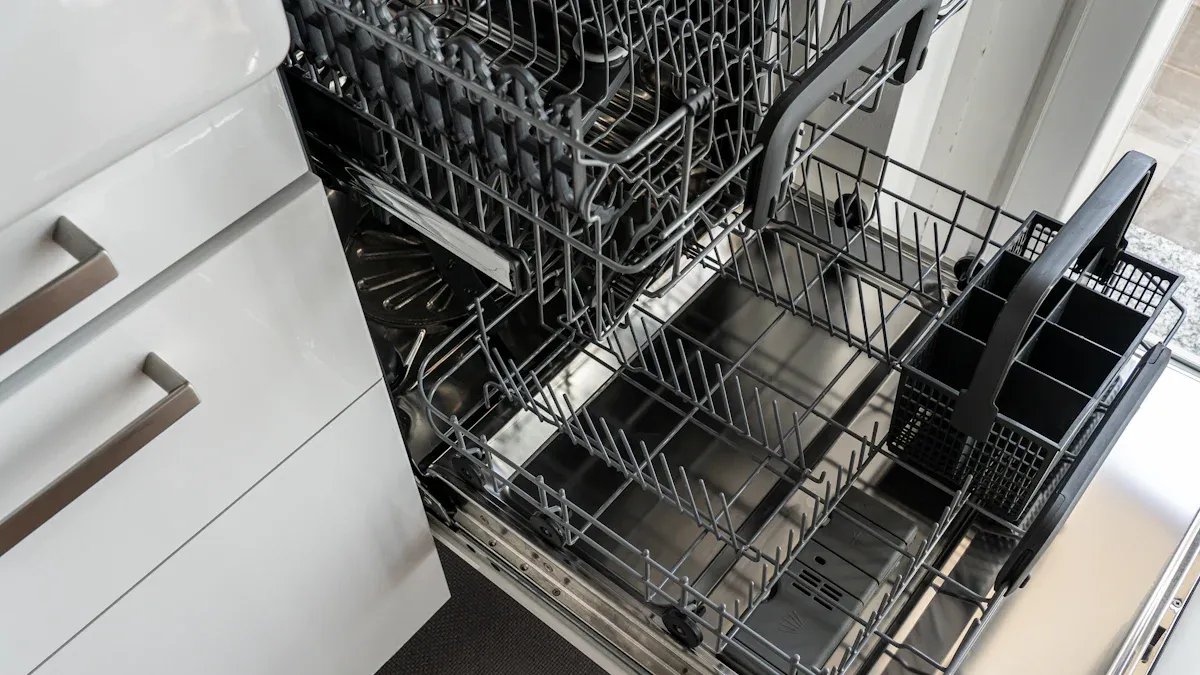
You might wonder, “why won’t my dishwasher drain?” when you see water pooling at the bottom after a cycle. Some standing water is normal, but if you notice persistent pooling, you probably have a problem. Let’s break down the most common reasons for a dishwasher not draining and what you can do about each one.
1. Drain hose is not positioned correctly
The drain hose plays a huge role in moving dirty water out of your dishwasher. If the hose isn’t installed with a high loop under your sink, water can flow back into the dishwasher, leaving you with a mess. Every major dishwasher manufacturer, including Whirlpool and GE, requires a high loop for proper drainage. The International Residential Code also mentions this guideline.
A high loop prevents dirty water from flowing back into the dishwasher.
You should install the high loop under the kitchen sink, not just beside the dishwasher.
If the hose is kinked or damaged, water can’t drain properly.
Tip: Check the hose for kinks or bends. Make sure it’s securely attached and forms a high loop under your sink.
2. Dishwasher door is open or unlatched
If your dishwasher door isn’t fully closed and latched, the appliance won’t start or finish its cycle. This safety feature stops water flow and drainage to prevent leaks. You might ask, “why won’t my dishwasher drain?” if you forget to latch the door.
Dishwashers have a safety mechanism that stops water flow when the door isn’t latched.
An electronic switch controls water flow, so if the door is open, water can’t drain.
Always check that the door is closed and latched before starting a cycle. If your dishwasher not draining, this simple step could solve the problem.
3. Water supply valve is closed
The water supply valve controls the flow of water into your dishwasher. If it’s closed, your dishwasher won’t fill or drain correctly. Sometimes, you might accidentally turn off the valve while working under the sink.
Make sure the water supply valve is open.
If your dishwasher isn’t filling with water, check the valve first.
4. Water inlet valve is blocked
A blocked water inlet valve can cause several problems. You might notice your dishwasher doesn’t fill with water, or water trickles in slowly. Sometimes, the dishwasher fills even when it’s turned off, which can lead to leaks. Dirty dishes and strange noises during the fill cycle are also signs of a blocked valve.
Your dishwasher may not fill with water properly or at all.
Water might enter the dishwasher slowly instead of quickly.
You could hear humming or buzzing noises when the dishwasher tries to fill.
Dishes may come out dirty because there isn’t enough water for cleaning.
When the water inlet valve is blocked, the wash cycle suffers. Your dishwasher can’t supply enough water for effective cleaning. You can clean buildup around the valve with a towel and use a flashlight to check for blockages. If you don’t see anything obvious, you may need professional help.
5. Overfill protection float is obstructed
The overfill protection float keeps your dishwasher from overflowing. If something blocks the float, your dishwasher might not drain properly. Food particles, soap scum, or even a misplaced utensil can get stuck under the float.
Check the float for debris or objects that might block its movement.
Gently clean around the float to make sure it moves freely.
Note: If the float can’t move up and down, your dishwasher may think it’s already full and stop draining.
Other Common Reasons for Dishwasher Not Draining
Technicians report these top five causes for drainage problems:
Clogged dishwasher filter
Blocked garbage disposal connection
Kinked or damaged drain hose
Improper loading blocking spray arms
Using the wrong detergent type
You should check the filter and garbage disposal connection if you’re still asking, “why won’t my dishwasher drain?” Sometimes, loading dishes incorrectly or using the wrong detergent can also lead to drainage issues.
Remember: Some standing water is normal, but if you see more than an inch of water after a cycle, it’s time to troubleshoot.
If you follow these steps and still find your dishwasher not draining, you may need to look deeper into pump or valve issues. Most problems have simple solutions, but don’t hesitate to call a professional if you feel stuck.
How to Unclog a Dishwasher
Safety First: Unplug and Remove Water
Before you start fixing your dishwasher, make safety your top priority. You should disconnect the power to avoid electrical shock. Remove any standing water to prevent slips. Here’s a quick checklist to help you get started:
Disconnect the power at your home’s main electrical panel.
Shut off the water supply by turning the valve clockwise.
Wear rubber-soled shoes for extra safety.
Test the circuit to make sure the power is off.
Keep a wrench and flashlight handy.
Clean the Dishwasher Filter
A dirty filter can block water flow and cause drainage problems. You should clean your filter once a month. Bosch recommends cleaning three to six times a year if you rinse dishes, or up to twelve times if you don’t. Follow these steps:
Remove the bottom rack and locate the filter.
Twist and unlock the filter, usually counter-clockwise.
Soak the filter in hot, soapy water.
Scrub gently, then rinse well.
Wipe down the filter housing.
Reinstall the filter.
Check and Clear the Drain Hose
Standing water, slow drainage, or bad smells often mean a clogged drain hose. Look for kinks or blockages. Disconnect the hose and flush it with water or use a flexible brush.
Inspect the Drain Pump and Inlet Valve
If your dishwasher isn’t draining, check the drain pump for debris like broken glass. Remove and vacuum out any blockages. Problems with the water inlet valve can also stop water from entering, especially in Whirlpool or GE models.
Clear Garbage Disposal and Air Gap
A clogged garbage disposal or air gap can push wastewater back into your dishwasher. Remove the air gap cap, clean out debris, and flush the line. Run a test cycle to make sure water flows properly.
When to Call a Professional
Call a technician if you see error codes, electrical damage, or if repairs don’t solve the problem. If your dishwasher is under warranty, avoid DIY fixes. Here’s a quick look at repair costs:
Repair Type | Description | Cost Range |
|---|---|---|
Drainage issue repair | Fixes clogs or faulty drain pumps | $100–$250 |
Preventing Future Drainage Issues
To prevent dishwasher drainage issues, clean the filter regularly and load dishes properly. Wipe down the interior weekly, check spray arms, and inspect hoses yearly. These steps help you avoid clogs and keep your dishwasher running smoothly. Now you know how to unclog a dishwasher and keep it working for years to come!
You can solve most dishwasher drainage problems by following each step in order. Regular maintenance helps your dishwasher last longer and work better. Watch out for these common mistakes:
Overloading the dishwasher
Ignoring strange noises or standing water
Skipping routine cleaning
Stay proactive, and you’ll keep your kitchen running smoothly!
FAQ
Why is my dishwasher not getting water?
You might have a closed water supply valve or a blocked water inlet valve. Check both, especially if you own a Whirlpool or GE dishwasher.
How do I know if the water inlet valve is bad?
You may hear humming or see your dishwasher not filling. If you own a GE or Whirlpool, this part often causes water issues.
Can I fix a draining problem myself?
Yes! You can clean the filter, check the drain hose, and clear the air gap. If you still see water, call a pro.