You gain practical benefits when you understand dishwasher components. Knowing the parts inside your dishwasher helps you spot problems quickly and keep your appliance running well.
You simplify troubleshooting and maintenance.
Regular care prevents issues and extends lifespan.
Early identification of problems saves money.
Key Takeaways
Understanding dishwasher components helps you troubleshoot issues quickly and maintain your appliance effectively.
Regular cleaning of parts like spray arms and filters enhances performance and extends the lifespan of your dishwasher.
Proper loading of dishes ensures optimal cleaning results and prevents clogs, leading to cleaner dishes every time.
How a Dishwasher Works
Cleaning Cycle Overview
When you start a dishwasher, it follows a set sequence to clean your dishes. First, the machine fills with water. The water inlet valve opens and lets water flow into the tub. The heating element warms the water to the right temperature. Once the water is hot, the pump and motor push the water through the spray arms. These spray arms spin and shoot water onto your dishes, removing food and grease. After washing, the drain pump removes dirty water from the tub. The machine then rinses the dishes with fresh water. At the end, the heating element helps dry the dishes before you open the door.
Tip: Using the right cycle and loading dishes properly can help your dishwasher clean more effectively.
Interaction of Components
Each part inside your dishwasher works together to deliver clean results. Here’s how the main components interact during a typical cycle:
The inlet valve manages water entry.
The float switch prevents overfilling by shutting off the water fill valve.
The motor powers the direct-drive pumps, which control water flow between spray arms and the drain.
The lower and upper spray arms, fed by the pump, spray water on both racks.
The heater element heats and maintains water temperature.
The thermostat adjusts the temperature based on the selected program.
The drain pump removes dirty water after washing.
You can see that every component has a specific job. Together, they make sure your dishwasher runs smoothly and gets your dishes sparkling clean.
Main Dishwasher Components
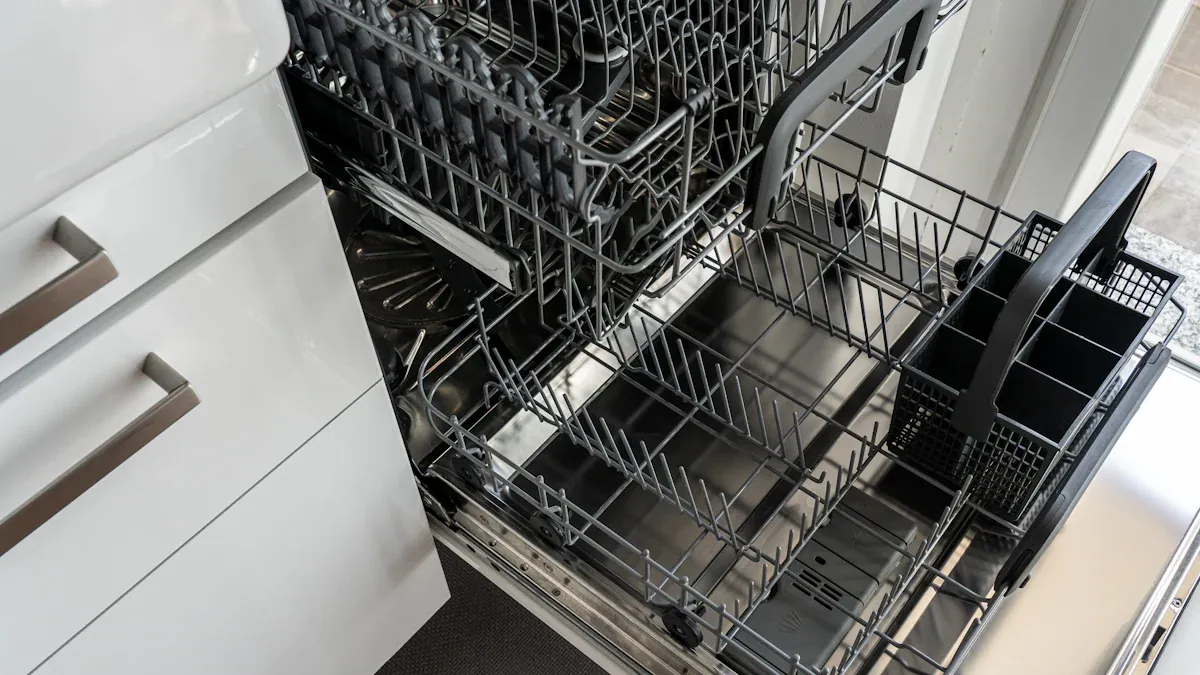
Understanding the main dishwasher components helps you recognize how each part works together to deliver more hygienic and efficient cleaning. Whether you own a built-in, portable, or countertop dishwasher, the basic components inside the main tub remain similar across types of domestic dishwashers. Let’s break down the internal and external dishwasher components that drive high washing performance.
Heating Element
The heating element sits at the bottom of the main tub. You rely on this part to heat water to the right temperature. Hot water breaks down grease and food residues, allowing detergent to dissolve and clean dishes thoroughly. If the heating element fails, you may notice dirty dishes or leftover residues after a cycle. Detergents activate at specific temperatures, so insufficient heat can prevent them from working properly.
The heating element maintains water temperature for effective cleaning.
Hot water helps dissolve detergent and remove food particles.
A faulty heating element leads to poor cleaning results and wet dishes.
Common Issue | Description |
|---|---|
Element not heating | Check your connections and power supply. |
Leaks | Tighten those nuts to prevent drips. |
Dishes still wet | Ensure the element is properly seated and connected for effective drying. |
Tip: If you notice dishes coming out wet or dirty, inspect the heating element for signs of damage or loose connections.
Water Inlet Valve
The water inlet valve controls the flow of water into the main tub. This part opens when you start a cycle, allowing water to enter quickly. If the valve malfunctions, your dishwasher may not fill with water, or water may trickle in slowly. Sometimes, water can leak into the main tub even when the dishwasher is off, causing flooding or dirty dishes.
Your dishwasher does not fill with water properly or at all.
Water slowly trickles into the dishwasher rather than entering swiftly.
Your dishwasher fills with water even when turned off, causing leaks.
Dishes come out dirty, as insufficient water prevents thorough cleaning.
Unusual humming or buzzing noises from the dishwasher when it tries to fill.
Note: If you hear buzzing or notice water leaks, check the water inlet valve for blockages or wear.
Pump and Motor
The pump and motor form the heart of the cleaning system. These components push water through the spray arms and drain dirty water from the main tub. Wear and tear from regular usage or damage from foreign objects like broken glass can cause pump and motor failure. When these parts malfunction, you may hear strange noises or see water left in the main tub after a cycle.
Wear and tear from regular usage
Damage caused by foreign objects like broken glass or utensils
Tip: Remove any debris from the main tub before starting a cycle to protect the pump and motor.
Spray Arms
Spray arms rotate and shoot jets of water throughout the main tub. You find these parts under each rack. They ensure water reaches every dish, providing high washing performance. If food particles clog the spray arm holes, cleaning results suffer. Regular cleaning of the spray arms keeps your dishwasher working efficiently and reduces electricity and water consumption.
Periodically check the spray arms to ensure that the water jet holes are clear of food particles.
Regular cleaning of the spray arms is essential for optimal performance.
Cleaning the spray arms regularly can enhance cleaning performance and energy efficiency.
It is recommended to perform this cleaning every 3-4 months.
Tip: Remove the spray arms and rinse them under running water to clear any blockages.
Filtration System
The filtration system sits at the bottom of the main tub. It traps food particles and prevents them from recirculating onto clean dishes. Modern dishwashers use self-cleaning filters or manual filters. Self-cleaning filters remove debris during each cycle, while manual filters require you to clean them regularly. Both types help maintain water quality and improve performance.
Modern dishwashers utilize two main types of filtration systems: self-cleaning filters and manual filters. Self-cleaning filters continuously eliminate food particles during wash cycles, which helps prevent these particles from settling back onto clean dishes. In contrast, manual filters require regular cleaning by the user but are generally quieter and more energy-efficient. Both types effectively maintain water quality and enhance cleaning performance.
Rinsing Dishes | Frequency of Cleaning |
|---|---|
Yes | 3 to 6 times a year |
No | 4 to 12 times a year |
After 50 washes | Check the filter |
Note: Clean the filter regularly to keep your dishwasher running smoothly and avoid clogs.
Drain Hose
The drain hose removes dirty water from the main tub after each wash and rinse cycle. This part connects to your kitchen sink drain, garbage disposal, or air gap. If the drain hose becomes blocked, you may see standing water in the main tub, slow drainage, or water backing up into the sink.
The dishwasher drain hose removes dirty water after each wash and rinse cycle.
It connects to the kitchen sink drain, garbage disposal, or air gap.
Common signs of blockage include:
Standing water in the dishwasher
Slow drainage
Gurgling noises
Water backing up into the sink.
If the dishwasher is not draining well, it may indicate a blockage.
Gurgling noises and water backing up into the sink are also signs of potential issues.
Standing water collecting in the bottom of the tub is a clear indicator of a clog.
Tip: Check the drain hose for kinks or clogs if you notice water left in the main tub after a cycle.
When you understand the inside parts of a dishwasher, you can use a parts diagram to identify each component. This knowledge helps you maintain your built-in dishwashers, portable dishwashers, and countertop dishwashers. You keep your domestic dishwasher working at peak performance and enjoy cleaner dishes with every cycle.
User-Accessible Parts of a Dishwasher
Racks and Silverware Basket
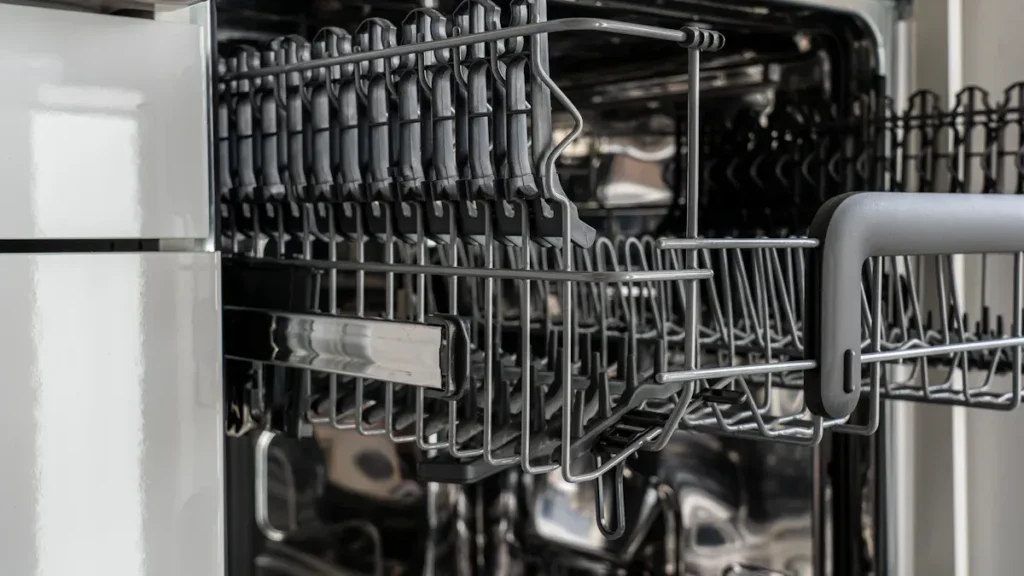
You interact with racks and baskets every time you load or unload your dishwasher. These parts hold dishes, glasses, and utensils securely. You should space items out to allow water to reach all surfaces. For best results, point utensils down with handles up for hygiene. If you want a deeper clean, point utensils up with handles down so water circulates between them. Always load butter knives with handles up to protect your hands. Use the designated slots in the utensil rack to prevent sticking and water marks. Keep silver-plated and stainless-steel cutlery in separate compartments to avoid rusting.
Tip: Arrange dishes so spray arms can reach every item. This helps you get cleaner results.
Detergent Dispenser
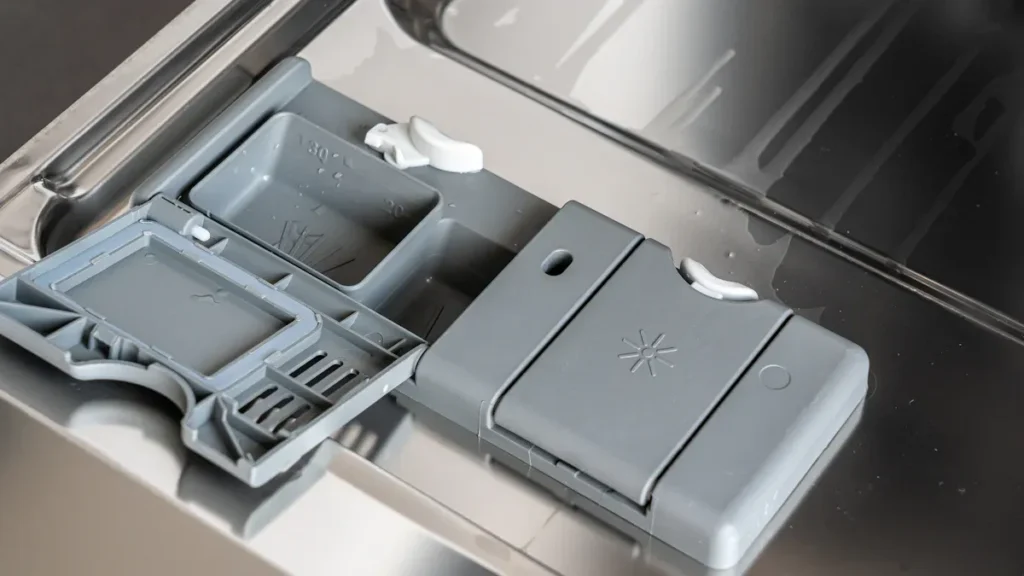
The detergent dispenser releases detergent at the right time during the wash cycle. You fill it before starting a load. If you use too much detergent, you may see residue on dishes. If you use too little, dishes may not get clean. Make sure the dispenser opens and closes smoothly. Clean it regularly to prevent clogs and ensure proper operation.
Fill the detergent dispenser with the recommended amount.
Check for leftover detergent after each cycle.
Wipe away buildup to keep it working well.
Control Panel
The control panel lets you select wash cycles and settings. You use it to start, pause, or customize each load. A user-friendly interface makes it easy to choose the right options. High-quality materials promise durability and reliable performance.
Feature | Benefit |
|---|---|
User-friendly interface | Simplifies cycle selection and navigation |
Durable design | Ensures long-lasting functionality |
Door Latch and Seal
The door latch and seal keep water inside during operation. A secure latch ensures the door closes tightly. The seal prevents leaks. If the latch is loose or bent, water may escape. A cracked or damaged gasket also leads to leaks. You should check these parts regularly and replace them if needed.
Tighten the latch if it feels loose.
Inspect the gasket for cracks or damage.
Replace the gasket if you see leaks.
Understanding the roles of parts you use daily helps you maintain your dishwasher and avoid common problems.
Electrical and Electronic Components
Modern dishwashers rely on several electrical and electronic parts to deliver reliable cleaning and drying. You benefit from these components because they automate cycles and respond to your choices.
Control Board
The control board acts as the brain of your dishwasher. You select a cycle, and the control board manages every step. It sends power to pumps, valves, and heaters. It also processes signals from buttons and displays. Safety features like door latches and overheat protection depend on the control board.
Function | Description |
|---|---|
Power distribution | Manages power to pumps, valves, and heaters. |
Timing & sequencing | Coordinates fill, wash, drain, and dry phases. |
User interface signals | Processes inputs from buttons, LEDs, and displays |
Safety interlocks | Ensures safety features are active |
Tip: If your dishwasher does not start or stops mid-cycle, check the control board for error codes or loose connections.
Sensors
Sensors help your dishwasher adjust cleaning automatically. You find sensors that measure water temperature, soil levels, and water levels. These sensors send data to the control board, which changes wash times or water usage. Float switches and solenoids also play a role in keeping water levels safe.
Water temperature sensors ensure proper heating.
Soil sensors detect how dirty dishes are.
Float switches prevent overfilling.
Timers
Timers coordinate each step in the cleaning cycle. You rely on timers to keep the process running smoothly. Each operation, such as filling, washing, draining, and drying, happens for a set duration.
Step | Operation | Duration |
|---|---|---|
1 | Fill water | 30 seconds |
2 | Wash | 30 seconds |
3 | Drain | 30 seconds |
4 | Dispense soap | 30 seconds |
5 | Fill water | 30 seconds |
6 | Wash | 30 seconds |
7 | Drain | 30 seconds |
8 | Fill water | 30 seconds |
9 | Wash | 30 seconds |
10 | Drain | 30 seconds |
11 | Dry | 30 seconds |
You get consistent results because timers keep each phase on track. If your dishwasher skips steps or runs too long, a faulty timer may be the cause.
Maintenance and Replacement
Identifying Issues
You can spot common dishwasher problems by paying attention to performance and sounds. If dishes come out dirty, you may have clogged spray arms or a failing pump. Loud noises often mean worn-out bearings or loose parts. Water leaks point to damaged seals or cracked hoses. Drainage problems usually result from blocked filters or faulty pumps. If your dishwasher fails to start or stops mid-cycle, check the door latch and control panel. Use the table below to match signs with possible causes:
Sign of Malfunction | Possible Causes |
|---|---|
Dirty dishes | Clogged spray arms, failing pump, detergent issues |
Strange noises | Worn-out bearings, broken motor parts, loose components |
Water leaks | Damaged door seals, loose hoses, cracked components |
Drainage problems | Clogged drain hoses, faulty drain pump, blocked filters |
Failure to start or complete | Faulty door latch, broken control panel, electrical issues |
Cleaning and Care
Regular cleaning keeps your dishwasher running smoothly and extends the life of its components. You should scrape food off dishes before loading to prevent clogs. Load dishes the right way so water flows freely. Use high-quality detergent to reduce residue. Run hot water before starting a cycle for better cleaning. Deep clean the tub monthly with vinegar. Rinse and scrub the filter every week. Clean spray arms every 2–3 months to remove debris. Wipe the door gasket with soapy water each month to prevent mold. Keep the detergent dispenser clean for proper release. Inspect the drain hose every year for blockages.
Tip: Run your dishwasher regularly to maintain seals and prevent odors.
When to Replace Parts
You need to consider replacement when cleaning and repairs no longer solve problems. If you notice dirty dishes after every cycle, check for clogged spray arms or a failing pump. Strange noises often mean you need replacement parts like bearings or motor components. Water leaks signal damaged seals or hoses that require replacement. Drainage problems may need replacement of the drain hose or pump. If your dishwasher fails to start, replacement of the door latch or control panel may be necessary. Always choose quality replacement parts for best results. Timely replacement keeps your dishwasher working efficiently and prevents bigger issues.
You gain long-term benefits when you understand your dishwasher’s components. Regular inspection and care keep your appliance efficient and hygienic.
Maintenance Tip | Description |
|---|---|
Inspect vital parts | Check seals, filters, and spray arms monthly. |
Use diagnostic tools | Monitor electronic components for early issue detection. |
Load dishes properly and check for leaks.
Schedule maintenance checks to ensure smooth operation.
Use this guide to troubleshoot and maintain your dishwasher for lasting performance.
FAQ
What should you do if your dishwasher leaves dishes dirty?
Check the spray arms for clogs. Clean the filter. Use the correct detergent. Load dishes so water reaches all surfaces.
How often should you clean the dishwasher filter?
You should clean the filter every month. If you do not rinse dishes before loading, clean it more often to prevent clogs.
Can you replace dishwasher parts yourself?
You can replace racks, spray arms, and filters yourself. For electrical parts, you should contact a professional to avoid safety risks.