You might feel frustrated when you notice your oven cooking unevenly. This problem happens to many people. Most common causes have simple solutions you can try at home. You do not need special tools or skills for many fixes. You can restore your oven’s performance with a few easy steps.
Key Takeaways
- Check the oven door seal regularly. A damaged seal can let heat escape, causing uneven cooking.
Ensure proper airflow by adjusting rack positions. Avoid overcrowding to allow hot air to circulate freely.
Test your oven’s temperature accuracy with a thermometer. Recalibrate if necessary to achieve even baking results.
Introduction: Why Is Your Oven Cooking Unevenly?
You may notice your oven cooking unevenly when your cookies burn on one side or your casserole stays raw in the middle. Many oven issues can cause this problem. You do not need to feel alone—homeowners report these problems often.
Here are the most common causes of uneven oven cooking:
Cause | Description |
|---|---|
Overcrowded oven racks | Improper loading can restrict airflow, leading to uneven cooking. |
Failing oven door seal | A damaged seal lets heat escape, causing longer cooking times and uneven baking. |
Dirty oven sensor | A dirty sensor gives false temperature readings, which affects the oven’s heating cycle. |
Worn heating elements | Damaged elements may not distribute heat evenly, resulting in uneven cooking. |
Malfunctioning convection fan | A faulty fan disrupts airflow, creating hot and cold spots. |
Faulty oven control board | A malfunctioning control board sends incorrect signals, causing erratic heating behavior. |
A dirty oven can also block airflow and make your oven cook unevenly. If you have overcrowded oven racks, you may see restricted airflow and hot spots. These oven issues can lead to disappointing results.
Tip: You can test for oven cooking unevenly by placing slices of white bread on each rack and baking at 350°F for 10 minutes. If some slices burn while others stay pale, your oven has uneven heat.
You should also check for a dirty oven or blocked fan. Look for worn heating elements or a loose door seal. These causes often explain why you see oven cooking unevenly. By understanding these problems, you can start fixing your oven and enjoy better meals.
What Does It Mean When an Oven Cooks Unevenly?
Common Signs of Uneven Oven Baking
You may notice uneven baking when cookies burn on one side or cakes rise more in the middle. If your oven does not bake evenly, you might see hot or cold spots on your food. Some common oven problems include a broken heating element, a faulty temperature sensor, or a broken oven fan. You can spot unevenly cooked food by looking for these signs:
Food browns faster in one area than another.
Cakes dome or sink in the center.
Roasts have raw spots while other parts are overdone.
Baked goods have dense or gummy textures.
A quick way to check for uneven baking is to place slices of bread on each rack and bake them. If some slices burn and others stay pale, your oven does not bake evenly.
How Uneven Cooking Affects Food Quality
Uneven cooking changes the texture and taste of your meals. If your oven is too hot, cakes may dome and have an uneven crumb. If it is too cold, baked goods turn out dense and lack proper rise. Uneven baking can ruin the structure of bread, cookies, and casseroles. You may find that your oven not baking evenly leads to disappointing results.
Feature | Description |
|---|---|
Even Heat Distribution | Ensures all parts of food cook evenly for consistent results. |
Fan Circulation | Moves hot air for faster, more even baking in convection ovens. |
BTU Measurement | Higher BTU in gas ovens means better temperature recovery and even baking. |
Ventilation | Keeps air moving and meets safety standards. |
Industry Certifications | Shows compliance with safety and efficiency standards. |
Tip: If you see unevenly cooked food often, inspect your oven’s heating elements. Look for visible damage or dark spots. Replace any broken heating element to fix uneven baking.
What Causes an Oven to Cook Unevenly?
1. Oven Door Not Fully Sealed
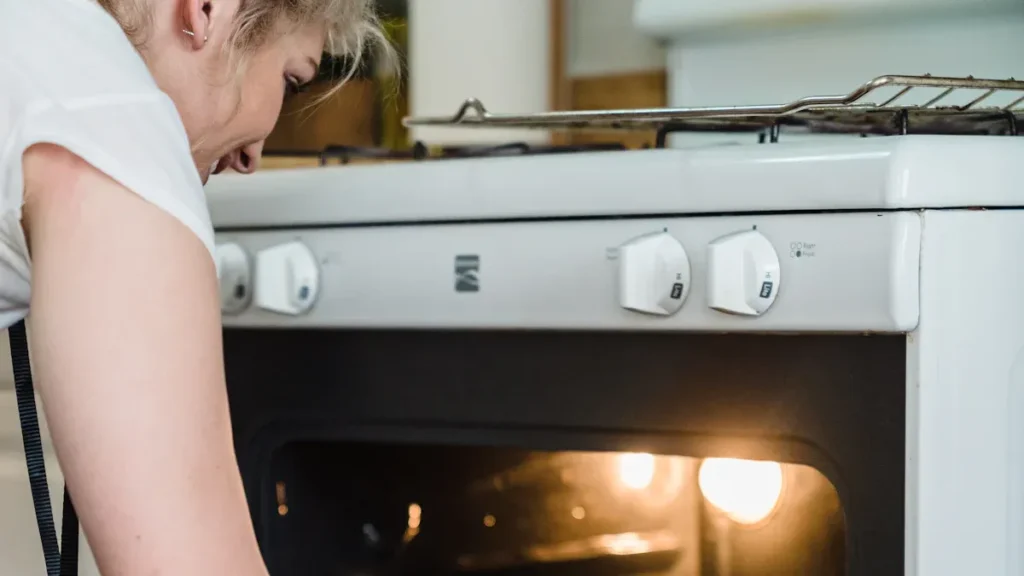
When your oven door seal wears out, hot air escapes and the oven struggles to keep a steady temperature. You may notice slow preheating and uneven baking.
A damaged seal fails to keep the oven airtight, causing heat loss.
Temperature instability leads to longer cooking times and inconsistent results.
Heating elements work harder, raising energy bills.
Hot air escapes around the tear in the seal.
The oven struggles to maintain the set temperature.
This leads to slow preheating and uneven baking results.
2. Poor or Blocked Airflow Inside the Oven
Blocked airflow creates temperature gradients and stagnant regions.
Issue | Effect on Temperature Distribution |
|---|---|
Oven Airflow Inefficiency | Creates temperature gradients (ΔT >10°C across PCB) |
Forced Hot Air Disparity | Leads to significant temperature disparity in the oven |
Outlet Position Influence | Creates stagnant regions, reducing velocity and uneven distribution |
3. Overcrowded or Incorrect Rack Placement
Placing food on the top rack can cause overbrowning. Positioning food too low may leave the bottom undercooked. Adjusting rack positions helps you achieve consistent results. Level your oven and check with a spirit level. Adjust the feet if needed.
4. Oven Temperature Is Not Calibrated Correctly
If your oven isn’t calibrated properly, you may see uneven browning, undercooked or overcooked foods, and longer cooking times. These temperature control issues often lead to oven not cooking evenly.
5. Faulty or Worn Heating Elements
Worn heating elements cause uneven cooking and longer times. You should replace any element with cracks or breaks.
Uneven cooking: One side cooks faster.
Longer cooking times: Food takes longer than usual.
Visual changes: Cracks or breaks in the element.
6. Malfunctioning Oven Temperature Sensor
The oven temperature sensor regulates heat. It communicates with the thermostat to activate or deactivate heating elements. If the sensor fails, you should replace it to restore even heat.
7. Uneven Heat Distribution in Conventional vs. Convection Ovens
Feature | Convection Oven | Conventional Oven | What It Means for Cooking |
|---|---|---|---|
Heat Source | Fan + heating element | Top and bottom elements | Convection spreads heat evenly, while conventional creates gentle, steady heat. |
Air Movement | Strong, active airflow | Still air | Airflow speeds cooking in convection; still air supports slow rising in conventional. |
Cooking Speed | Faster | Slower | Meals often finish earlier in convection because heat moves more efficiently. |
Texture | Crisp and browned | Softer and lighter | Convection improves surface browning; conventional protects delicate structure. |
Temperature | Usually 25°F lower | Standard recipe temps | Convection requires adjustments, while conventional follows typical instructions. |
Best Uses | Roasting, cookies, sheet-pan meals | Cakes, custards, pastries | Choose based on texture: crisp vs gentle rise. |
Energy Use | Slightly lower | Standard | Shorter cook times reduce overall energy in convection. |
If you notice your oven not cooking evenly, check these common oven problems. You may need to replace a faulty sensor or heating element. Calibrate your oven to fix temperature control issues and restore performance.
7 Ways to Troubleshoot an Oven Cooking Unevenly
1. Check and Secure the Oven Door Seal
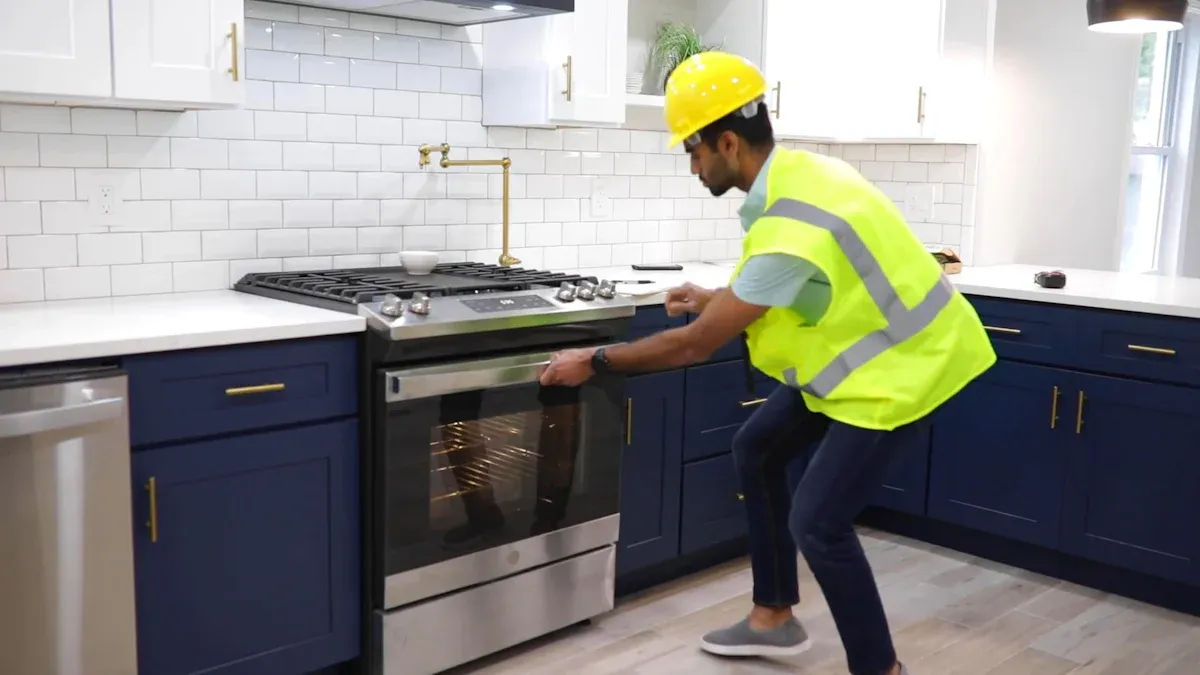
A good seal keeps heat inside your oven. If the seal is damaged, heat escapes and causes uneven heat distribution. You may notice longer cooking times or food that bakes unevenly. To fix common oven problems, open the door and inspect the rubber gasket for cracks or gaps. Replace the seal if you see damage. This simple fix can restore proper heat distribution and prevent your oven not working as expected.
Tip: A strong seal also protects your oven’s components from extra strain, which helps avoid costly repairs.
2. Improve Airflow and Adjust Rack Positions
Proper airflow ensures even heat distribution. Adjust oven racks so air can move freely around your food. Place pans at least two inches apart. Try not to cook on the highest or lowest rack unless a recipe calls for it. This adjustment helps fix an oven that’s not baking properly and improves overall heat distribution.
3. Avoid Overloading the Oven
Overcrowding blocks airflow and disrupts heat distribution. Use the table below to check if an oven is not cooking evenly due to overloading:
Problem | Result |
|---|---|
Overloaded oven racks | Uneven or undercooked food |
Blocked airflow | Hot and cold spots |
Fire hazard | Risk of oven damage |
Leave space between dishes to allow for proper heat distribution and avoid common oven problems.
4. Test and Recalibrate the Oven Temperature
If your oven won’t heat to the right temperature, use an oven-safe thermometer to test accuracy. Place it in the center, preheat to 350°F, and compare readings. If the temperature is off by more than 15°F, recalibrate using your owner’s manual. This process is a key step in how to fix uneven baking and restore even heat distribution.
5. Inspect and Replace Heating Elements
Heating elements control heat distribution. Unplug the oven and check for cracks or burnt spots. Replace damaged elements to fix an oven that’s not baking properly. Always use insulated tools and restore power only after installation.
6. Check the Temperature Sensor Function
A faulty sensor can cause uneven heat distribution. Make sure the sensor is secure and not touching the oven wall. Replace it if you see damage. This fix helps restore even baking and solves many common oven problems.
7. Use the Right Bakeware and Oven Settings
The type of bakeware affects heat distribution. Use insulated pans for even results. Always preheat your oven for consistent heat. Adjust settings based on your recipe to fix an oven that’s not baking properly.
Regular fixes and maintenance help you fix common oven problems and improve heat distribution. If your oven not working persists, contact a professional for further help.
Why You Should Not Open the Oven Door While Baking?
You might feel tempted to check your food by opening the oven door. This habit can cause problems with your baking results. When you open the oven door, the temperature inside can drop quickly. You may see the temperature fall by as much as 100°F. Even a short peek can lower the heat by at least 25 degrees. Each time you open the door, you risk uneven oven cooking. Cakes may deflate, and cookies may bake unevenly. Your food might not rise or brown as expected.
A sudden drop in temperature can make you think the oven is not heating. You may notice that your baked goods do not cook evenly or take longer to finish. If you open the door often, you force the oven to work harder to recover lost heat. This can lead to frustration and poor results.
The oven fan also plays a key role in even baking. The fan moves hot air around the oven, which helps all parts of your food cook at the same rate. If the fan breaks or becomes blocked, you may see some areas overcooked while others stay raw. You might believe the oven is not heating, but the real problem could be poor air circulation.
To keep your oven working well, check the fan for dust or food debris. Unplug the oven before cleaning. Use a soft brush or vacuum to remove buildup. If the fan does not spin freely, you may need to replace it. Regular cleaning and careful use help prevent uneven oven cooking and keep your meals delicious.
Cleaning and Maintenance Fixes
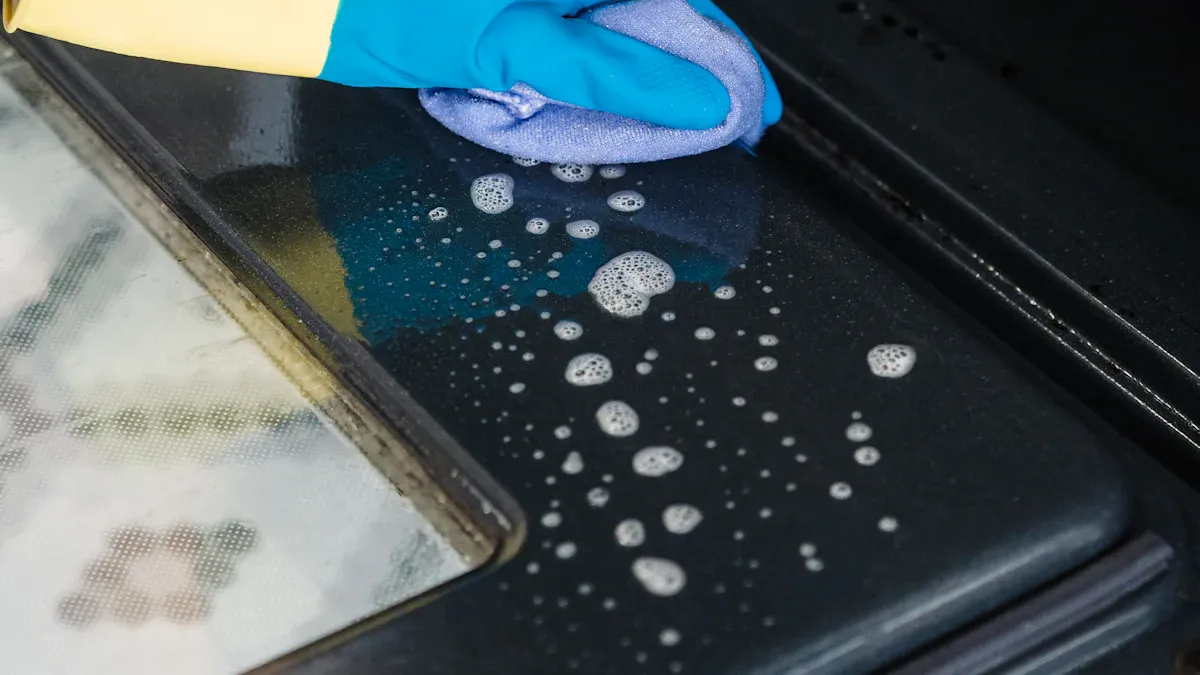
You can prevent uneven oven cooking by making cleaning and maintenance part of your routine. A clean oven works more efficiently and helps you avoid common problems like hot and cold spots. When you remove food spills and grease, you allow hot air to move freely. This improves heat distribution and reduces the risk of your oven not cooking evenly.
Pay close attention to the oven fan and vents. If the fan collects dust or grease, it cannot circulate hot air properly. You may notice uneven oven cooking or food that bakes faster on one side. Clean the fan and vents regularly to keep air moving and maintain even temperatures. For best results, clean your hood vents at least every three months. If you cook often or use a lot of oil, clean them every month.
Clean your vent hood monthly if you cook frequently.
For moderate use, clean every two to three months.
Wipe the oven interior after spills to prevent buildup.
Proper rack placement also matters. Make sure racks are not overcrowded. This allows air to reach all sides of your food. If you see uneven results, try adjusting the racks or removing extra pans.
Regular maintenance helps you spot problems early. You can check for worn heating elements or a faulty sensor during cleaning. If you use a Maytag oven, follow your manual for maytag oven troubleshooting or learn how to calibrate maytag oven for better results. With these habits, you keep your oven running smoothly and enjoy evenly cooked meals every time.
You can fix an oven not cooking evenly by checking airflow, recalibrating temperature, and inspecting heating elements. If uneven oven cooking continues or you see error codes, contact a professional. Regular maintenance and maytag oven troubleshooting keep your oven efficient and your meals delicious.
Tip: Clean your oven often to prevent problems and extend its lifespan.
FAQ
How do you know if your oven is not cooking evenly?
You can test for uneven oven cooking by baking bread slices on each rack. If some slices burn while others stay pale, your oven does not cook evenly.
What should you do if your oven temperature seems off?
Place an oven thermometer inside and compare readings. If you see a difference, follow your manual for how to calibrate Maytag oven or try basic recalibration steps.
When should you call a professional for oven problems?
If you try maytag oven troubleshooting and still see oven not cooking evenly or error codes, contact a certified technician for help.