You want to save money and help the planet, right? Air conditioning now uses 19% of household electricity, and 89% of homes have it in 2025. New smart systems with AI, eco-friendly refrigerants, and solar options make energy saving air conditioner tips more effective than ever.
Try these simple changes and watch your bills drop!
Key Takeaways
Set your thermostat to 78°F for optimal comfort and energy savings. This simple adjustment can significantly lower your energy bills.
Consider switching to a smart thermostat. These devices can save you $140–$200 a year by automatically adjusting temperatures based on your habits.
Regularly clean or replace your air conditioning filters. This maintenance helps your system run efficiently and can extend its lifespan.
Tip 1: Set Efficient Thermostat Levels
Setting the right temperature on your air conditioner can make a huge difference in your energy bills. If you want to get the most out of energy saving air conditioner tips, start with your thermostat setting. Experts and the U.S. Department of Energy all agree:
78°F is the sweet spot for summer.
This temperature keeps you cool without making your conditioner work overtime.
Most energy companies recommend 78 degrees Fahrenheit for the best balance of comfort and savings.
Smart Thermostats
Smart thermostats take the guesswork out of energy saving air conditioner tips. These devices learn your habits and adjust the temperature for you. You can even control them from your phone, so you never waste energy when you’re not home. Check out how smart thermostats stack up:
Feature | Smart Thermostats | Traditional Thermostats |
|---|---|---|
Energy Savings Potential | 10–20% on annual costs | Manual adjustments lead to waste |
Adjustment Method | Automatic based on patterns | Manual |
Remote Access | Yes | No |
Switching to a smart thermostat can save you $140–$200 a year. That’s one of the best energy saving air conditioner tips you’ll find!
Temperature Scheduling
Scheduling your air conditioner to run less when you’re away or asleep is another top energy saving air conditioner tip. Lowering the temperature by just one degree can save about 3% on your cooling costs. Dynamic schedules can add another 2–10% in savings. Try setting your conditioner to cool down before you get home, then let it rest when you’re out. You’ll notice the difference in your wallet and your comfort.
Tip: Combine smart thermostats with scheduling for the ultimate energy saving air conditioner tips. You’ll enjoy a cool home and lower bills all summer long!
Tip 2: Maintain Your Air Conditioning
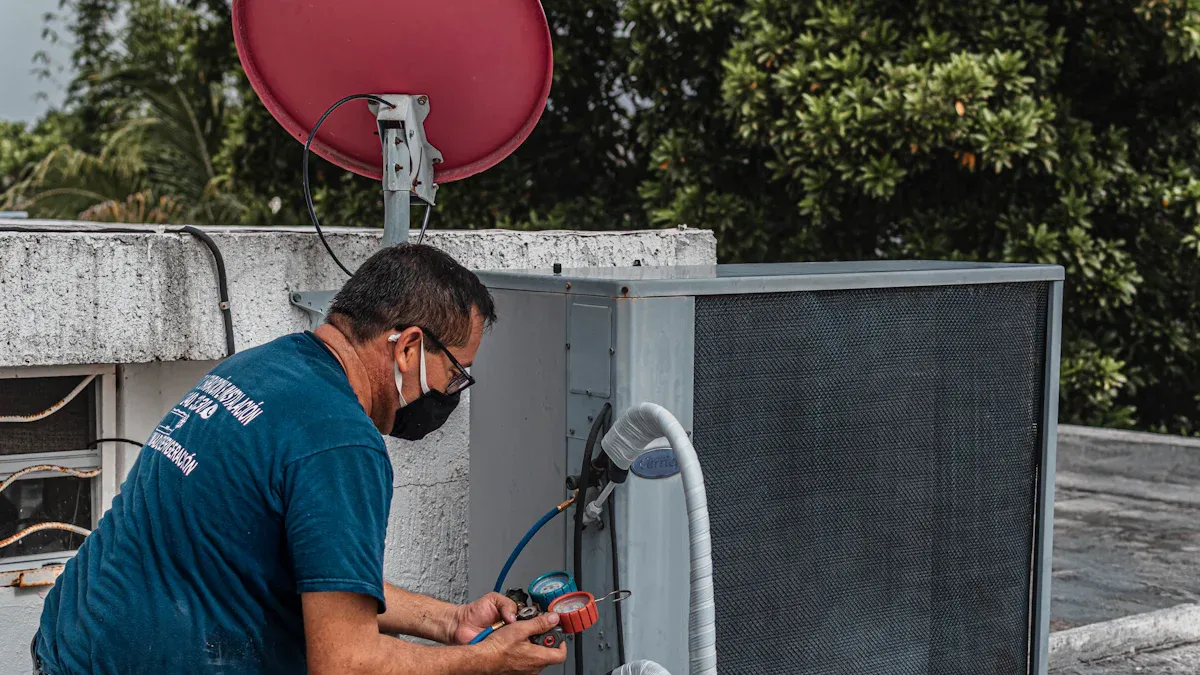
Keeping your air conditioning in top shape is one of the smartest moves you can make. You want cool air, lower bills, and a system that lasts for years. Regular care helps your air conditioning work better and saves you money. Many people forget about routine ac maintenance, but it makes a huge difference.
Clean or Replace Filters
Dirty filters slow down your air conditioning and make it work harder. You should check your air conditioning filters every month. If you have pets or allergies, swap them out more often. Clean filters help your air conditioning run smoothly and keep your home fresh. Here’s a quick guide for filter care:
Environment Type | Recommended Frequency |
|---|---|
Clean Environments (e.g., Office) | Every 3 months (quarterly) |
Harsh Environments (e.g., Factories) | Every month |
Dusty and Debris-Prone Environments | Before filters become clogged |
Check air filters monthly.
Change standard fiberglass filters every 30–90 days.
Replace more often if you have pets or allergies.
Regular Tune-Ups
You want your air conditioning to last, right? Schedule regular tune-ups with a professional. Tune-ups keep your air conditioning running at peak efficiency. Technicians clean parts, check for problems, and calibrate your system. This means your air conditioning uses less energy and cools your home faster. Well-maintained air conditioning can last several years longer than neglected units.
Here are some common mistakes to avoid:
Failing to change air filters
Neglecting regular maintenance
Setting the thermostat too low
Ignoring potential problems
Not cleaning air vents
Not checking the drain
Using the AC when no one is home
Forgetting about windows
Tip: Follow these air conditioning tips to keep your system efficient and your bills low. Routine ac maintenance helps you avoid costly repairs and keeps your air conditioning working its best.
Tip 3: Seal and Insulate
Keeping cool air inside your home is just as important as making it. If you let air escape, your air conditioner works harder and your bills go up. Sealing and insulating your home stops energy loss and keeps your space comfortable.
Windows and Doors
You might not notice, but small gaps around windows and doors can let a lot of cool air slip out. Air leaks from doors alone can cause up to 20% of heat loss in a typical home. That means your air conditioner has to run longer to keep you cool. You can fix this by:
Adding weatherstripping to doors and windows
Using caulk to seal cracks and gaps
Checking for drafts with your hand or a candle
Tip: Walk around your home and feel for drafts. Even a tiny breeze means you’re losing money!
Tip 4: Use Window Coverings
Window coverings do more than add style—they help block out heat and keep cool air inside. The U.S. Department of Energy says about 76% of sunlight on standard windows turns into heat. Smart window coverings can cut that heat gain by up to 77%. Here are some top choices for 2025:
Cellular shades: Reduce unwanted solar heat by up to 60% and add insulation.
Curtains and drapes: Closed during the day, they can cut heat gains by 33%.
Louvered blinds: Reflect sunlight and lower heat gain by around 45%.
Solar shades: Block UV rays and help keep rooms cooler.
Window quilts and films: Add insulation and protect against glare.
Choose light-colored or reflective coverings for the best results. Proper installation makes a big difference, so make sure your shades fit snugly against the window. With the right coverings, you’ll notice your air conditioner doesn’t have to work as hard—and your energy bills will show it!
Use Fans and Reduce Humidity
Keeping your home cool doesn’t always mean running your air conditioner nonstop. You can use fans and control humidity to boost comfort and cut energy costs. These energy-saving tips help you stay cool and save energy all summer.
Circulate Cool Air
Fans are your secret weapon for summer energy savings. Ceiling fans, floor fans, and even whole house fans help move cool air around your home. When you use a ceiling fan, you can raise your thermostat by a few degrees and still feel comfortable. That means your air conditioner works less, and you save energy.
Here’s how fans and air conditioning work together:
Study Focus | Energy Savings | Additional Notes |
|---|---|---|
Automated ceiling fans with AC | 36% overall cooling season | Most people felt just as comfortable |
AC setpoint increase with ceiling fans | 10% reduction in power use | 85% of people reported steady comfort |
AC setpoint increase from 77°F to 80°F w/ fan | 10% less energy consumption | Fans made up for higher temperature settings |
Set ceiling fans to spin counterclockwise in summer.
Only run fans when you’re in the room.
Use floor fans to create a cross-breeze.
Try whole house fans in the evening to pull in cool air.
Tip: For every degree you raise your AC above 75°F, you can save about 3% on cooling costs. Setting your AC to 79°F with a fan can lower your bill by 12%.
Lower Indoor Moisture
Humidity makes your home feel warmer and stickier. Lowering indoor moisture is one of the best energy-saving tips for comfort and efficiency. When you reduce humidity, your air conditioner doesn’t have to work as hard. You’ll notice you feel cooler, even at higher temperatures.
Use a dehumidifier to pull moisture from the air. This lets your AC focus on cooling, not drying.
Lower humidity helps your body cool itself through sweat evaporation.
Manage humidity to keep your AC from running too long or too often.
Tip: Keep bathroom and kitchen fans running after showers or cooking. This simple step helps control moisture and supports your other energy saving efforts.
Try these tips to circulate cool air and manage humidity. You’ll enjoy a more comfortable home, lower energy consumption, and real savings on your energy costs.
Tip 5: Smart Air Conditioning Habits
Adjust for Weather
You can make a big difference in your energy efficiency just by paying attention to the weather. When outdoor temperatures drop, you don’t need as much cooling. Try raising your thermostat a few degrees on cooler days. This simple move helps your air conditioner use less power and keeps your home comfortable.
Here’s a quick look at how temperature changes affect energy use:
Temperature Change | Effect on Energy Consumption |
|---|---|
1 °C increase in outdoor temperature | Increases hourly energy consumption by 6.57 kW |
1 °C increase in air conditioner temperature | Decreases hourly energy consumption by 8.63 kW |
Total energy saved (July–October) | 8749 kWh |
Carbon emissions reduced | 1405 kg |
You can also schedule your cooling for the coolest parts of the day. Run your air conditioner less during peak heat and more when the sun goes down. This habit supports energy efficiency and helps lower your bills.
Tip: Adjust your thermostat when storms or clouds roll in. You’ll save energy and stay comfortable.
Limit Unnecessary Use
You don’t need to cool every room all the time. Focus your cooling on the spaces you use most. Turn off your air conditioner in empty rooms or when you leave the house. If you raise your thermostat by 10 degrees for eight hours each day, you could save about 10% on your annual energy costs.
Try these air conditioning tips to cut down on waste:
Use fans to boost cooling without lowering the thermostat.
Pre-cool rooms before peak hours.
Draw blinds to block out heat.
Avoid using ovens or dryers during the hottest part of the day.
Install a programmable thermostat to manage cooling times.
Behavioral changes like these can have a bigger impact on energy efficiency than expensive upgrades. When you combine smart habits, you get better cooling and lower costs. You also help the environment by reducing carbon emissions.
Note: Your daily choices matter. Smart air conditioning tips keep your home cool and your wallet happy.
You can cut your annual energy use by up to 17% just by following these five tips. Start with one or two changes, then build new habits. A quick checklist helps you stay on track. 🌱 Want to share your own air conditioning tips or stories? Drop them in the comments!
FAQ
How often should you clean or replace your air conditioner filter?
You should check your filter every month. Replace it every 30–90 days. If you have pets or allergies, change it more often.
Can you save money by using a fan with your air conditioner?
Yes! Fans help circulate cool air. You can raise your thermostat a few degrees and still feel comfortable. This trick saves energy and lowers your bill.
What is the best temperature to set your thermostat in summer?
Set your thermostat to 78°F when you’re home. This setting keeps you cool and helps you save the most on energy costs.